
Stamped Concrete Maintenance Guide for Ottawa Homes

You step onto the patio after the first spring thaw and notice the finish has lost its sheen. A few sections look lighter, white salt bloom sits in the pattern, and the edges near the driveway are beginning to flake. In Ottawa, that sight usually points to more than ordinary dirt. Moisture, deicers, repeated freezing and thawing, traffic, and sunlight have all tested the sealer.
Good stamped concrete maintenance is about protecting the slab before small surface issues become larger repairs. The right routine is practical: remove grit, clean gently, inspect after frost, reseal when the surface shows wear, and manage snow and salt carefully. Exposure differs across Barrhaven, Nepean, Kanata, Stittsville, Orleans, and other Ottawa neighbourhoods, so a shaded backyard patio won't always need the same attention as a road facing driveway.
Table of Contents
Routine Cleaning That Protects Pattern and Colour - A low stress cleaning routine
Sealing Schedule and Application Tips That Last - Reading the surface before you reseal - Applying the new sealer
Winter Care and Smart Deicer Choices - Traction without overloading the surface - Snow removal details that prevent surface wear
Stain Removal and Minor Repairs You Can Handle - Simple fixes for surface issues
Your Year Round Plan and When to Call a Pro in Ottawa - Spring - Summer - Fall - Winter
Why Stamped Concrete Needs Seasonal Care in Ottawa
A patio in Barrhaven can look sound through the middle while the walkway beside the street turns dull and patchy after spring thaw. In Kanata and Orleans, road splash can wear the driveway sealer faster than a sheltered backyard surface. A shaded path in Stittsville may retain moisture longer, while a sunny section loses colour and sheen sooner.
Ottawa's freeze thaw cycle puts moisture through every weak point. Water enters worn sealer, cracks, open joints, and exposed edges, then expands when it freezes. Deicing salts keep moisture active around the concrete and can speed surface deterioration. Canadian climate guidance links exterior concrete exposed to freezing and deicers with CSA A23.1 exposure requirements, including a 5 to 7 percent air entrainment target by volume for exposure class C 1. (Canadian climate guidance for stamped concrete)
Practical rule: Sealer provides the first line of defence only when the slab is clean, dry, sound, and checked before winter.
Sunlight and traffic wear the protective film from another direction. Ultraviolet exposure, foot traffic, and vehicle tyres gradually reduce moisture resistance along with visible sheen. Water beading gives you a useful field check. Rounded beads indicate that the sealer is still working in that area. If water darkens and spreads into the concrete, inspect the surface more closely instead of relying on a fixed resealing calendar.
Neighbourhood exposure changes the inspection priority. A road-facing driveway deserves closer checks after salt-heavy months, while a sheltered patio may show moisture retention, shade-related staining, or slower drying. Look at the edges, recesses, and transitions first, then compare colour and sheen across the slab.
Stamped patterns also create places where leaves, sand, salt, and dirty meltwater collect. Aggressive cleaning can strip the sealer unevenly from raised texture and leave the colour inconsistent. Scaling or flaking should be addressed early, and this guide to concrete spalling on stamped surfaces explains common warning signs.
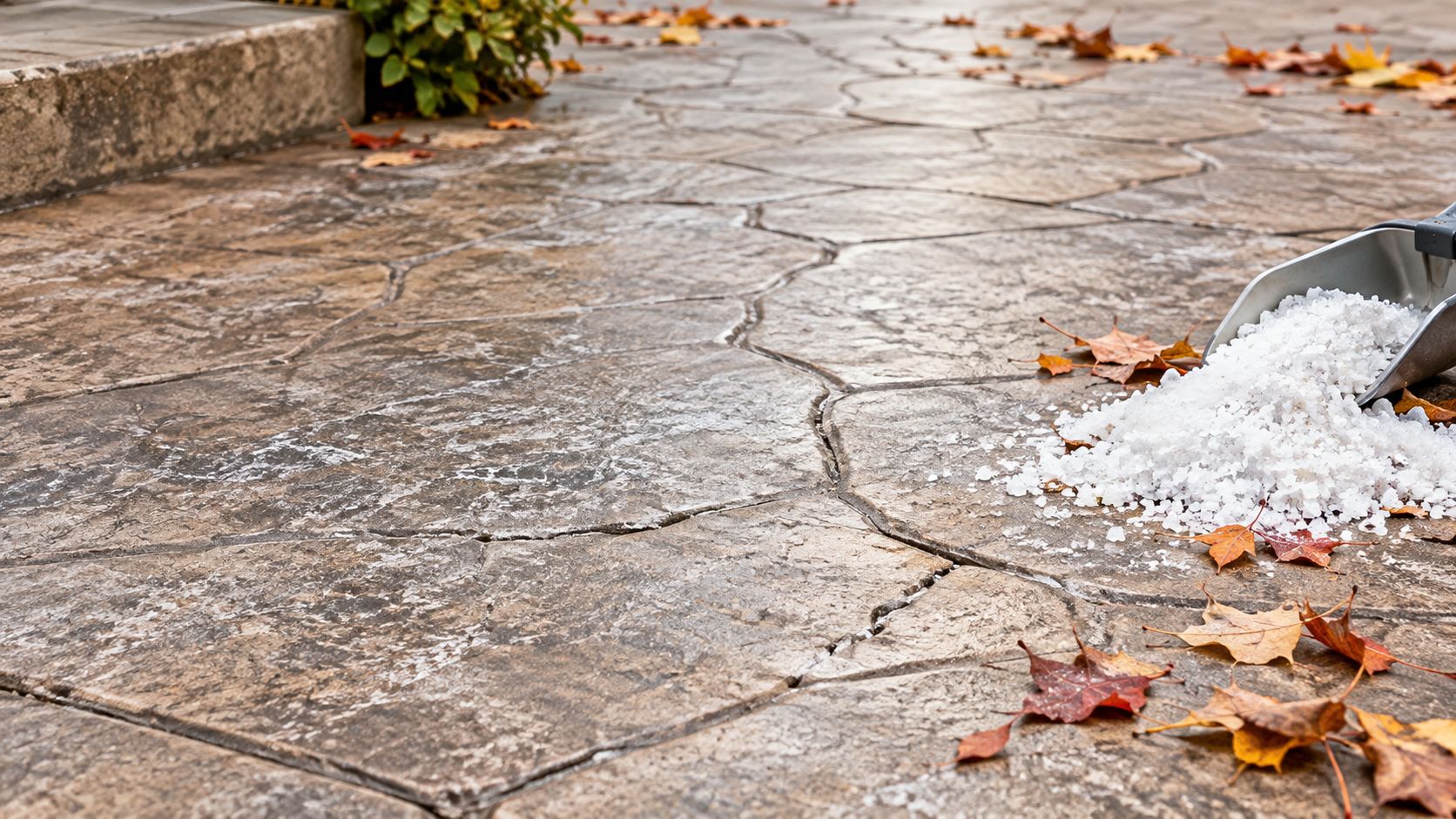
A properly maintained patio or driveway should look natural, with consistent colour and protection rather than constant patching or an artificially glossy finish. The same inspection principles remain useful when comparing local work with Dublin stamped concrete driveway experts. Seasonal care means cleaning, checking exposure-related wear, resealing when the surface shows it needs protection, controlling winter products, and repairing small defects before they spread.
Routine Cleaning That Protects Pattern and Colour
Grit left on an Ottawa driveway becomes abrasive under tyres and boots, wearing the sealer and raised pattern together. Start with a dry sweep using a soft outdoor broom. Work along joints, recesses, steps, and the edge where concrete meets garden beds, because those areas hold sand and leaf debris.
For general washing, use clean water and a mild concrete cleaner. Treat oil or traffic residue with a gentle degreaser, keeping the work within the affected area rather than scrubbing across clean sections. Rinse until no cleaner remains in the texture, then let the slab dry fully. Ontario maintenance guidance also recommends dry sweeping, gentle degreasing, thorough rinsing, and complete drying before sealing. (Ontario concrete maintenance guidance)
A low stress cleaning routine
Sweep first: Remove sand, leaves, grit, and salt before adding water. Dry debris is easier to control than muddy residue.
Treat spots early: Blot fresh oil where possible, then apply a compatible degreaser to the remaining mark. Keep the product from spreading into clean areas.
Wash lightly: Use a soft brush or controlled hose rinse. A pressure washer may suit some surfaces, but excessive pressure or a concentrated nozzle can strip sealer and leave an uneven finish.
Rinse completely: Cleaner trapped in low points can attract dirt and leave a dull film.
Dry before judging: Wet concrete can show temporary colour variation. Assess the pattern and finish only after the surface dries.
Avoid acidic cleaners as a routine choice. They may alter the colour, affect the sealer, or leave a patch that does not match the surrounding concrete. Strong household chemicals can also leave residue that interferes with later resealing. Test an unfamiliar cleaner in a discreet spot before washing the full patio or driveway.
A patio in Alta Vista or Riverside South may mainly collect leaves, soil, and foot traffic. A Blackburn Hamlet driveway can receive more grit, road splash, and shaded moisture. Set the cleaning frequency by actual exposure, not a fixed promise. Sweep whenever debris builds up, deal with spills promptly, and wash during suitable mild weather.
Cleaning advice from another climate can still demonstrate useful technique, provided the product choice, water pressure, and drying time suit Ottawa's freeze thaw conditions. This overview of Dallas-Fort Worth patio care offers a comparison for cleaning methods. Ottawa surfaces require extra care around salt residue, complete drying, and timing before colder weather arrives.
Sealing Schedule and Application Tips That Last
A calendar helps with planning, but inspection should decide when an Ottawa stamped concrete surface needs resealing. Southern Ontario guidance commonly places resealing on a 2 to 3 year cycle. Surfaces exposed to road salt or pool chemicals may need attention nearer the 2 year end of that range. (Southern Ontario resealing guidance)
Check the finish after cleaning and drying. Fading sheen, lighter areas beside darker sections, flaking, and water that no longer beads all suggest the protective film is wearing. Ottawa repair guidance gives a broader 2 to 5 year interval, while also treating visible wear as a better trigger than a fixed date. (Ottawa repair and resealing guidance)
Neighbourhood exposure changes the timing. A covered patio in Alta Vista may stay cleaner than a Blackburn Hamlet driveway exposed to road splash, grit, and shaded moisture. Riverside South properties can also vary with drainage, tree cover, and traffic. Inspect the actual slab rather than resealing every property on the same schedule.
Reading the surface before you reseal
A dull finish does not automatically call for another heavy coat. Inspect for dirt, salt bloom, grease, cracks, and loose material first. Clean the surface, address minor defects, and confirm that the concrete is dry and sound. Sealer applied over contamination traps the problem and can produce cloudy or uneven areas.
The weather window matters through Ottawa's fall. Plan for at least 24 hours of dry weather above 10°C after cleaning, and allow 24 to 48 hours of dry weather for a new sealer. (Ontario sealing sequence guidance) Rain arriving before the product cures can spoil the finish, so leaving the work until the last autumn weekend creates unnecessary risk.
Cue | What It Means | Action |
|---|---|---|
Water no longer beads | Moisture resistance may be declining | Clean, dry, and plan a compatible reseal |
Sheen has faded across traffic lanes | Foot or vehicle traffic is wearing the finish | Inspect closely and reseal before winter if the slab is sound |
Sections look lighter than nearby areas | Colour protection may be thinning unevenly | Test clean a small area, then assess the sealer |
White salt bloom is visible | Salts and moisture have moved across or through the surface | Remove residue, inspect edges and joints, and repair before sealing |
Flaking or open joints appear | The issue may extend beyond sealer wear | Stabilise the surface and arrange a repair assessment |
Applying the new sealer
Use a measured sequence: dry sweep, degrease traffic or oil residue, rinse thoroughly, and let the slab dry fully. Choose a product compatible with the existing finish. Two thin coats are generally safer than one heavy application because excess product can pool in recesses, streak, or cure unevenly. Add a non slip additive on sloped walkways, steps, or pool decks.
Do not seal damp, dusty, actively flaking, or structurally moving concrete. Sealer protects sound concrete, but it cannot correct settlement or rebuild concrete that has lost its paste. For application details, follow this guide to applying stamped concrete sealer.
If the work involves grade changes, drainage concerns, or a retaining wall, review when to call a retaining wall pro. Water management around the slab often matters as much as the coating on top.
Winter Care and Smart Deicer Choices
A driveway beside a busy Ottawa road can collect brine, slush, and plough spray all winter. A sheltered backyard patio may receive little salt but still hold meltwater in its textured recesses. Freeze thaw exposure depends on the property, so winter care should focus on where water and deicer collect.
Salt helps control ice, yet repeated chloride exposure can shorten the service life of stamped concrete, particularly where water pools and freezes around raised patterns. Freshly installed concrete needs the most protection. Southern Ontario guidance recommends no deicer during the first winter after installation, with sand used for traction instead. After that, apply rock salt only lightly to moderately, and avoid calcium chloride and magnesium chloride. (Southern Ontario winter salt prevention guidance)
Traction without overloading the surface
Sand provides grip without adding chloride salts. Spread it where people step, turn, or approach a doorway, and clear snow first so it reaches the walking surface instead of becoming part of a thick frozen slush layer.
Use deicer only where slipping remains a concern. Apply the smallest practical amount, then remove visible residue during a thaw. Rinsing salt away before the next freeze reduces the time it stays against the sealer and concrete.
Ottawa exposure changes by neighbourhood and by site layout. A driveway in Kanata or Orleans may receive road splash that a Greely patio avoids. A sloped Nepean walkway can move meltwater quickly, while a low edge in Riverside South may hold it. Check the areas below snowbanks, near downspouts, beside steps, and along plough routes. These are better inspection points than relying on a fixed winter routine.
Snow removal details that prevent surface wear
Use a plastic edged shovel where possible. Metal blades can scratch the sealer or catch raised edges in the stamped pattern. Push snow away from low drainage points, steps, and garage thresholds rather than creating an ice dam against them.
Clear early: Remove snow before foot and vehicle traffic compress it into hard layers that need stronger treatment.
Protect edges: Check borders, joints, steps, and transitions after heavy weather, since they receive concentrated water and salt.
Control meltwater: Keep downspouts and discharge paths from sending water across the same section repeatedly.
Rinse during thaws: Wash away visible salt residue before temperatures fall again.
Inspect in spring: Once frost has left the ground, look for scaling, flaking, cracks, and lighter patches.
Salt can contribute to concrete deterioration over time, while product compatibility and the sealer's cure condition also matter. (Ottawa concrete and interlock resealing guidance) The practical choice is to reserve deicer for necessary traction, select the least aggressive suitable product, and remove residue during thaws. In spring, use the inspection findings to decide whether the surface needs cleaning, repair, or resealing rather than following a calendar alone.

Stain Removal and Minor Repairs You Can Handle
Most small stamped concrete problems respond better to patience than force. White salt bloom may look alarming, but it often sits on or near the surface. Start with dry removal, then use clean water and a soft brush. Avoid acidic treatment unless a qualified professional has confirmed that it suits the concrete and finish.
Oil needs a different approach. Blot fresh material instead of scrubbing it outward, then apply a gentle concrete degreaser to the affected section. Rinse thoroughly and let the surface dry before deciding whether the mark remains. Always test a cleaner in an inconspicuous location because stamped colour and sealer can react differently from plain unfinished concrete.
Simple fixes for surface issues
White residue: Brush away dry salts, wash gently, and rinse until the surface is clean. Recheck after drying.
Dull patches: Clean first and compare the patch with nearby areas. Dullness may indicate sealer wear rather than embedded dirt.
Hairline cracks: Remove loose grit, clean the crack, let it dry fully, and use a compatible repair material. Keep the repair neat so it doesn't leave a contrasting strip.
Open joints: Clear debris and confirm that the joint is not allowing water to collect or move behind the surface.
Minor flaking: Remove loose material without widening the damaged area unnecessarily. Don't coat over unstable concrete.
A small repair should be dry and sound before resealing. If colour matching matters, test the repair and finish in a discreet location first. A patched area can accept sealer differently from the surrounding slab, especially where the original surface has weathered.
The boundary between homeowner work and contractor work is clear. Call for help when cracks are spreading, sections have settled, scaling is widespread, water continues to pool, or the stamped texture is breaking away across a broad area. Those conditions can indicate movement, drainage problems, or freeze thaw damage that cleaning and spot patching won't solve.
Ottawa homeowners can use this guide to stamped concrete repair when deciding whether a visible defect is a minor maintenance issue or needs a more complete assessment. Delaying a repair through another winter rarely improves the surface.
Your Year Round Plan and When to Call a Pro in Ottawa
A reliable maintenance plan follows Ottawa's weather rather than a single annual date. Spring reveals winter damage, summer creates the easiest cleaning conditions, autumn is the last practical opportunity to reseal, and winter rewards careful snow and salt management.
Spring
Inspect after frost has left the slab. Look at edges, joints, steps, vehicle turning areas, and places where snow sat. Remove salt residue, clean gently, and mark cracks or flaking that need repair.
Summer
Sweep regularly and wash when dirt or traffic residue builds up. Deal with oil, leaves, and food spills before they settle into the pattern. Summer is also a good time to assess colour, sheen, and water beading without the pressure of an approaching freeze.
Fall
Complete repairs before sealing. Reseal when the surface shows wear and the forecast provides the required dry conditions, rather than applying product to a damp slab just because winter is approaching. Confirm that downspouts, drainage paths, shovels, and traction materials are ready.
Winter
Clear snow early, protect the stamped texture from metal edges, use sand where practical, and limit deicer exposure. During thaws, rinse salt from the surface and prevent meltwater from sitting at edges and joints.
Professional help makes sense for deep cleaning, large resealing areas, colour refresh work, widespread flaking, structural cracks, settlement, or drainage related problems. Ottawa Stamped Concrete serves homeowners across Barrhaven, Nepean, Kanata, Stittsville, Orleans, Manotick, Findlay Creek, Cumberland, Gloucester, Vanier, Alta Vista, Bells Corners, Greely, and Blackburn Hamlet, so the same inspection based approach can be adapted to a patio, driveway, walkway, porch, or pool deck.
The simplest rule is also the most useful. Inspect by condition, clean without attacking the finish, repair before sealing, and manage salt before it becomes trapped in the surface. That rhythm gives stamped concrete a better chance of staying sharp through Ottawa's freeze thaw seasons.
If your patio, driveway, or walkway is showing dullness, lighter patches, flaking, or water that no longer beads, visit Ottawa Stamped Concrete to arrange practical advice on cleaning, repair, recolouring, or resealing. Get the surface assessed before the next winter cycle, while the slab is still dry and sound enough to protect.
Comments