
Concrete Slab Repair in Ottawa: A Homeowner Guide

In April, a Barrhaven homeowner backs out of the driveway and notices a crack that wasn't there in November. One corner sits higher than the other, water collects beside the garage, and the first instinct is to buy crack filler. That reaction is understandable, but in Ottawa, the visible crack is often only the surface evidence of a deeper problem.
Exterior slabs in Barrhaven, Nepean, Kanata, Stittsville, and Orleans face repeated freeze and thaw cycling, moisture intrusion, wet soil, and de icing exposure. Federal guidance for concrete repair at Canadian public facilities recognises that damaged slabs may require lifting, cracking repairs, or section replacement, and an Ottawa area federal project documented a sidewalk that was lifting on the south side of a building. You can review that federal concrete repair project as a useful local benchmark.
The practical lesson is straightforward. Diagnose the movement first, then choose the repair. A sound slab with shallow surface damage may respond well to resurfacing, while a driveway lifted by frost or pushed toward the foundation may need drainage correction, leveling, or replacement. This guide explains how to tell the difference before you spend money on a repair that winter will undo.
Table of Contents
Why Concrete Slabs Fail in Ottawa - Damage follows local conditions - Start with the cause, not the product
What Causes Concrete Slab Damage and Cracking - Moisture and freeze and thaw cycling - Soil movement and surface exposure
How to Diagnose Your Slab Damage - Use a visual inspection sequence - Listen for hollow areas
Comparing Resurfacing, Leveling, and Full Replacement - When resurfacing earns its place - When leveling is the better middle ground - When replacement is the honest answer
Cost Ranges and What Changes the Price - What moves the quote - Ask what the price includes
Protecting Your Slab Through Ottawa Winters - Follow a seasonal checklist - Respect cold weather placement
When to Hire a Pro and Choosing the Right Contractor - Questions worth asking before work begins
Why Concrete Slabs Fail in Ottawa
The problem often becomes obvious during the first warm spell. Snow melts across a Nepean walkway, the ground softens, and a homeowner sees a fresh split running across the slab. The concrete may have looked fine through the autumn, but months of trapped moisture and repeated temperature changes have exposed weaknesses that were developing below the surface.
Ottawa's exterior concrete faces a demanding combination of conditions. Water enters small pores and cracks, freezes, expands, and then retreats when temperatures rise. The slab also reacts to the soil beneath it, especially where drainage leaves the base wet. De icing products add another source of stress by helping moisture penetrate the concrete and contributing to surface scaling.
Damage follows local conditions
A crack in a Kanata driveway isn't necessarily the same problem as a crack in an Orleans patio. The pattern, height difference, drainage, and condition of the surrounding soil all matter. A straight, shallow surface crack in an otherwise stable slab may be cosmetic, while a displaced section, rocking step, or slope toward the house suggests movement below.
Federal Canadian repair guidance describes lifting, cracking, and section replacement as appropriate responses where slabs are damaged. That distinction matters for homeowners because concrete slab repair isn't always a patching exercise. The durable solution may involve correcting the grade or drainage before anyone fills the crack.
Practical rule: If the slab is still moving, a surface repair is a temporary disguise, not a lasting repair.
Start with the cause, not the product
A tube of filler can close an opening, but it can't stop water from collecting beside the slab or soil from heaving underneath it. The same applies to a thin resurfacing layer placed over a section that has lost support. It may look clean when finished, yet the old movement remains active below.
Homeowners who want to understand the wider warning signs can also review this resource on structural damage claims help, particularly when slab movement forms part of a larger property concern. For an Ottawa inspection, focus first on where water goes, whether sections sit at different heights, and whether the surface sounds solid under a simple test.
What Causes Concrete Slab Damage and Cracking
In Ottawa, a slab can look sound in fall and show movement after the first serious freeze. The visible crack is often the result, not the starting point. Water, freezing temperatures, soil movement, and the original concrete mix all affect how quickly damage develops.
Moisture and freeze and thaw cycling
Concrete contains pores that absorb water. When that water freezes, it expands and places pressure on the surrounding material. Repeated freezing and thawing can turn small openings into wider cracks, while exposed surfaces may begin to flake, delaminate, or develop hollow areas.
This process is common on unprotected driveways, steps, patios, and walkways. A single winter may not create dramatic damage, but each cycle gives moisture another path into the slab. Filling the opening without reducing water exposure leaves the same weakness in place.
The soil below the slab can create a larger problem. Poor grading, blocked drainage, downspouts discharging beside the walkway, or a base that holds water can keep the underside saturated. Wet soil expands as it freezes and can push part of the slab upward. Regional guidance on slab movement in Eastern Ontario notes that frost heave may lift slabs by several inches, so drainage and base correction may matter more than crack filler.
Homeowners looking into wider property warning signs can also review this resource on structural damage claims help, especially when slab movement appears alongside other concerns.
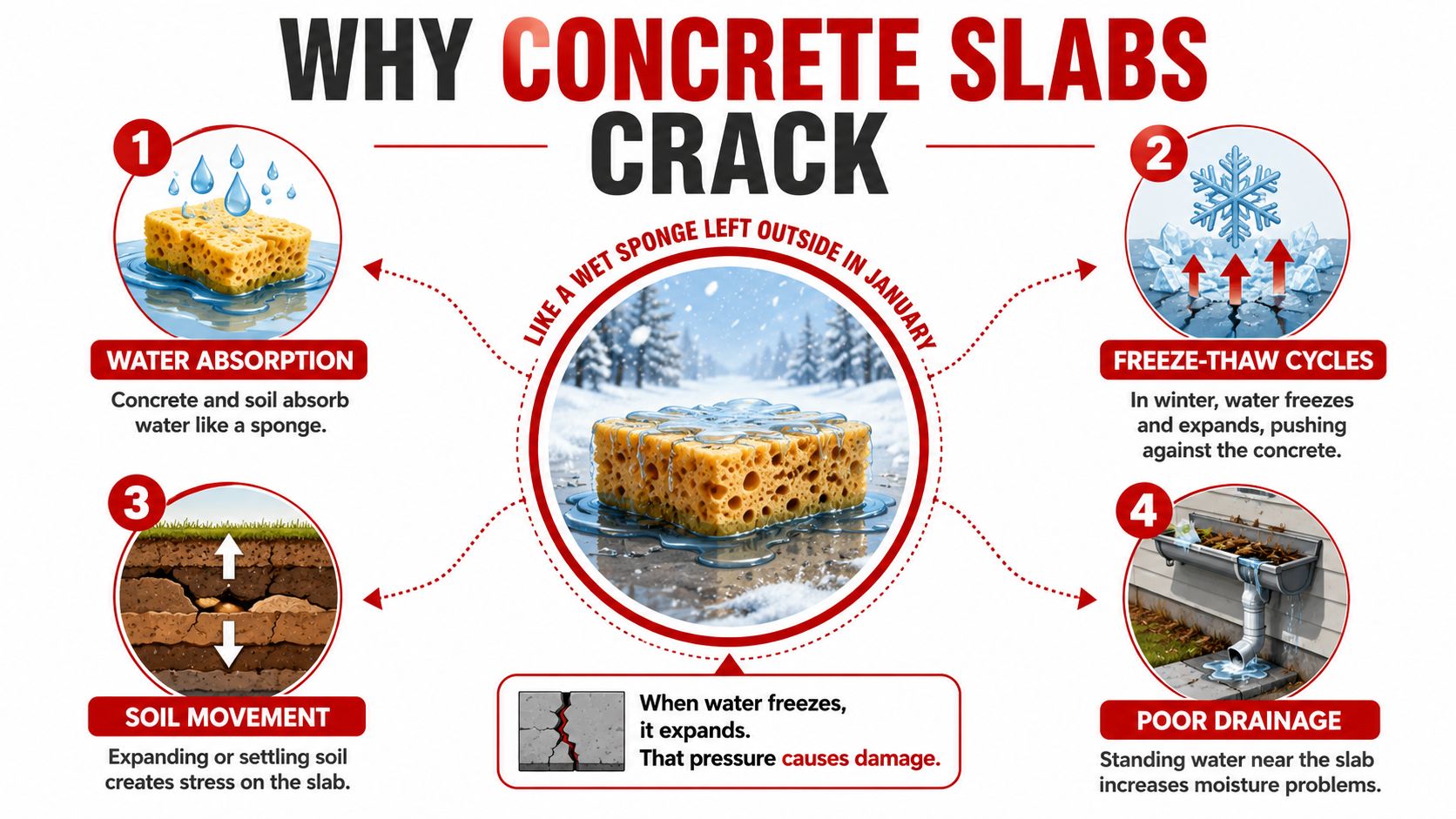
Soil movement and surface exposure
A frost-lifted section may settle as the ground thaws, but it can remain uneven or lose contact with its base. It may rock under foot or vehicle loads, concentrating stress around edges, joints, and existing cracks. That is why a clean surface patch can fail when movement underneath continues.
De-icing exposure adds more stress. Moisture saturation followed by freezing accelerates scaling, cracking, and delamination, particularly in concrete with a permeable mix or excess water. Exterior repair materials should favour low permeability, freeze and thaw durability, and controlled water content, rather than the cheapest patching compound.
Original construction also affects service life. Excess mixing water generally reduces concrete strength and durability, so a slab can deteriorate even when drainage appears acceptable. Assess the full pattern: a flaking surface, standing water, and a raised edge point toward a broader cause than the crack alone.
How to Diagnose Your Slab Damage
Start on a dry day when you can see the whole area. Walk the slab slowly and mark anything that affects safety or drainage. You're looking for more than the width of a crack. You're trying to determine whether the slab remains stable.
Use a visual inspection sequence
Check these conditions in order:
Surface cracks: Hairline cracks with no height difference may be cosmetic. Wider openings, branching cracks, and broken edges deserve closer inspection.
Changes in level: Run a straightedge across the area or compare adjoining sections by eye. A raised corner or a sunken panel can indicate movement below.
Trip hazards: Pay attention to walkway joints, driveway transitions, steps, and garage entries. A small vertical offset can matter more than a long shallow crack.
Water patterns: Observe the slab after rain. Standing water, damp edges, or a slope toward the house point to a drainage concern.
Nearby discharge: Check whether a downspout, sump outlet, or roof runoff sends water toward the slab or its base.
A stable slab with shallow damage is a possible patching or resurfacing candidate. A slab that rocks, has separated joints, or directs water toward the foundation needs a broader assessment.
Listen for hollow areas
A hammer tap test can reveal areas where the surface has separated from the material below. Tap across the slab with the side of a small hammer and compare the sound. A solid section usually gives a firm response, while a hollow or drummy sound can indicate delamination or a void.
A chain drag test works well across larger areas. Pull a heavy chain over the surface and listen for a change from a sharp, solid sound to a dull response. These methods don't replace a contractor's assessment, but they help you map hidden damage before discussing options.
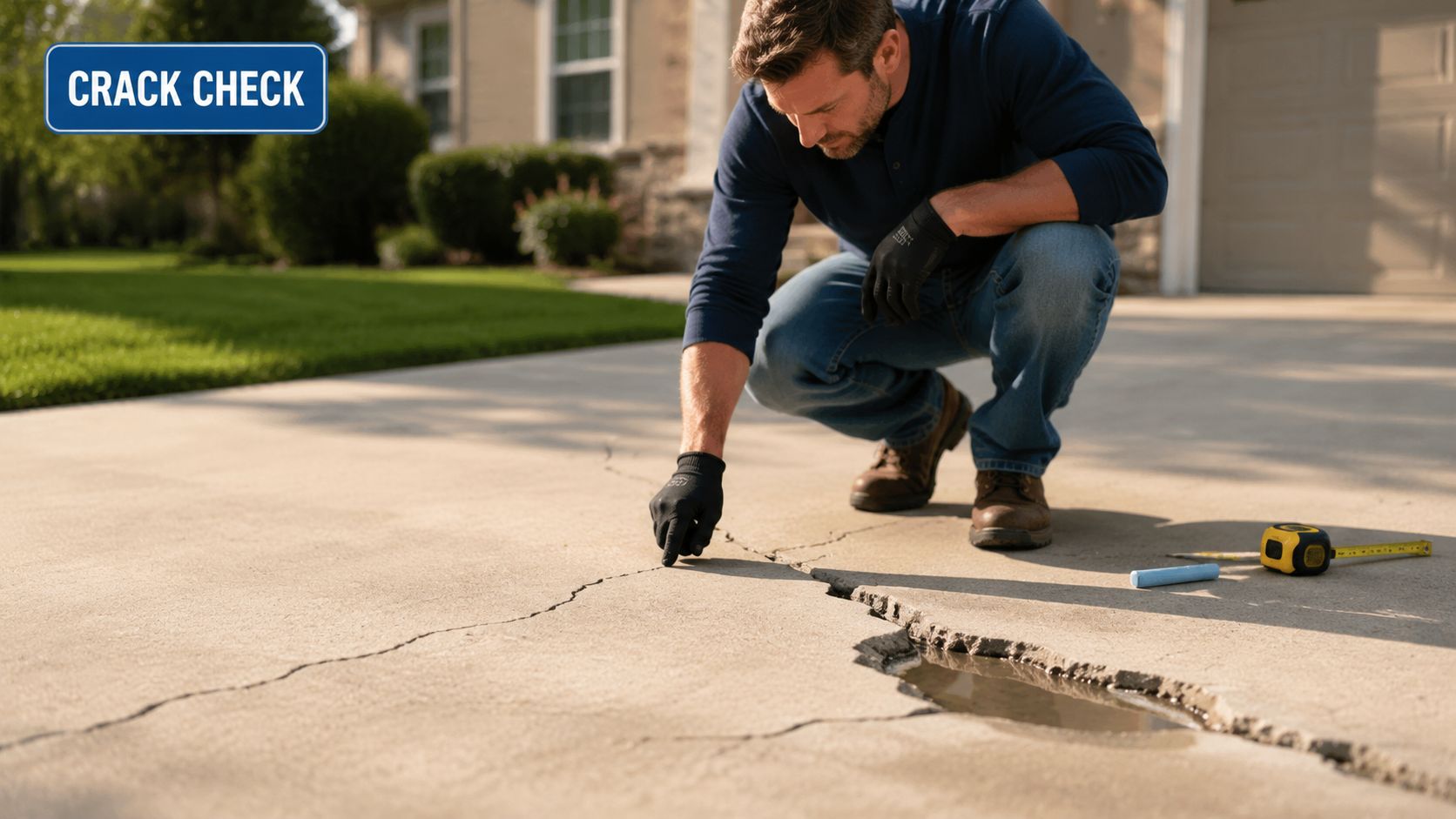
A crack is a symptom. A height change, hollow sound, or drainage failure tells you whether the slab needs more than filler.
Comparing Resurfacing, Leveling, and Full Replacement
The right repair depends on what the inspection finds. Resurfacing treats the surface, leveling treats position, and replacement treats the slab and its supporting base. Choosing between them without identifying the failure mechanism is how homeowners end up paying twice.
Damage Type | Best Repair Method | Durability Outlook | Relative Cost |
|---|---|---|---|
Shallow scaling and minor surface wear on a stable slab | Resurfacing, patching, and sealing | Good when the base is sound and moisture is controlled | Lower to moderate |
Settled section with usable concrete and accessible voids | Slab lifting or leveling, followed by crack repair | Good when the cause of settlement is addressed | Moderate |
Broken, badly heaved, or structurally unstable section | Full depth replacement with base correction | Strongest option when drainage, joints, curing, and support are handled correctly | Highest |
Slab directing water toward the house | Drainage and grade correction, often with leveling or replacement | Depends on whether water is redirected permanently | Moderate to highest |
When resurfacing earns its place
Resurfacing makes sense when the slab is broadly level, solid under testing, and affected mainly by shallow scaling, worn colour, or minor surface defects. Preparation decides the outcome. The contractor must remove weak material, clean the surface, repair damaged areas, and select a compatible overlay or coating.
Resurfacing won't stabilise a slab that is heaving or settling. If the base keeps shifting, the new surface will follow that movement and crack again. That isn't a failure of the finish alone. It's a mismatch between the repair and the problem.
When leveling is the better middle ground
Slab jacking or leveling can return a settled panel to a more usable position without removing the entire slab. Ottawa winter guidance identifies crack filling and slab jacking among the methods used for broken concrete. The method can be practical for a walkway, patio, or driveway section when the concrete still has enough integrity to move safely.
The trade off is that leveling doesn't automatically solve every drainage or soil issue. The void, weak base, or water pathway still needs attention. For a useful technical example of lifting work, see this guide to concrete slab lifting.
When replacement is the honest answer
Replacement is usually warranted when the slab is extensively broken, severe frost heave has distorted it, the base has failed, or the grade sends water toward the foundation. Full depth work should include saw cut boundaries, proper surface preparation, load transfer, curing, and joint sealing. Federal pavement guidance recommends a minimum repair length of 1.8 m when mechanical load transfer devices are used, and 2.4 to 3.0 m when they aren't, because short patches can concentrate stress at their edges.
If you suspect a leak beneath or beside the slab, use a specialist rather than guessing at the source. Homeowners dealing with plumbing concerns can contact Good Boy Plumbing for leaks, while a concrete contractor handles the slab, base, drainage, and finish.
Cost Ranges and What Changes the Price
Concrete repair quotes vary because the work behind the visible damage varies. Small crack filling and isolated patching sit at the lower end of the repair spectrum. A full driveway or patio resurfacing project generally requires more preparation and material, while leveling depends on slab size, access, and the amount of support that must be restored.
Full replacement carries the broadest scope. It can include demolition, excavation, disposal, base correction, forming, reinforcement or load transfer, new concrete, finishing, curing, and sealing. A contractor who quotes only the new surface may appear cheaper, but that price can leave out the work that prevents the same failure from returning.
What moves the quote
Several practical conditions affect the price of concrete slab repair:
Area and thickness: A small walkway panel requires less material and labour than a thick driveway slab.
Base condition: Soft, wet, or missing granular support can require excavation and replacement.
Drainage and grade: Redirecting runoff or correcting a slope adds work, but ignoring it can make a repair short lived.
Site access: Tight side yards, fences, landscaping, and limited equipment access increase handling time.
Repair material: Ontario exterior slabs need materials chosen for low permeability and strong freeze and thaw durability.
Finish requirements: A plain repair, decorative resurfacing, colour restoration, or stamped appearance each requires different preparation and products.
Cheap material is often a false economy in Ottawa. Repeated saturation, freezing, and de icing exposure will test any repair, so the material must suit an exterior slab rather than match the colour on installation day.
Ask what the price includes
Request a written scope that identifies demolition or preparation, base work, drainage changes, material selection, curing, joint treatment, and sealing. For homeowners comparing surface finishes, this guide to concrete resurfacing near me offers useful context on what a resurfacing project involves.
A credible quote may be higher because it includes the unglamorous steps. Those steps often determine whether the repair remains sound after the next Ottawa winter.
Protecting Your Slab Through Ottawa Winters
Winter protection starts before the first sustained freeze. Ottawa guidance recommends repairing damaged concrete before winter and sealing the porous surface afterward, so moisture and de icing exposure have fewer ways to enter. Waiting until frozen ground and cold temperatures arrive limits both the repair options and the curing conditions.
Follow a seasonal checklist
Late spring and summer are usually the practical windows for inspection and repair. Look for movement, hollow areas, edge damage, and drainage changes after the ground thaws. Complete repairs while conditions allow proper preparation and curing.
Late summer and autumn are the time to clean the slab, confirm that repaired areas are sound, and apply a compatible sealer after the repair has cured. Small concrete repairs should be protected from use for 24 hours before foot traffic and 72 hours before vehicle traffic, and final sealing products should wait for the full 28 day cure, according to this concrete repair and curing guide.
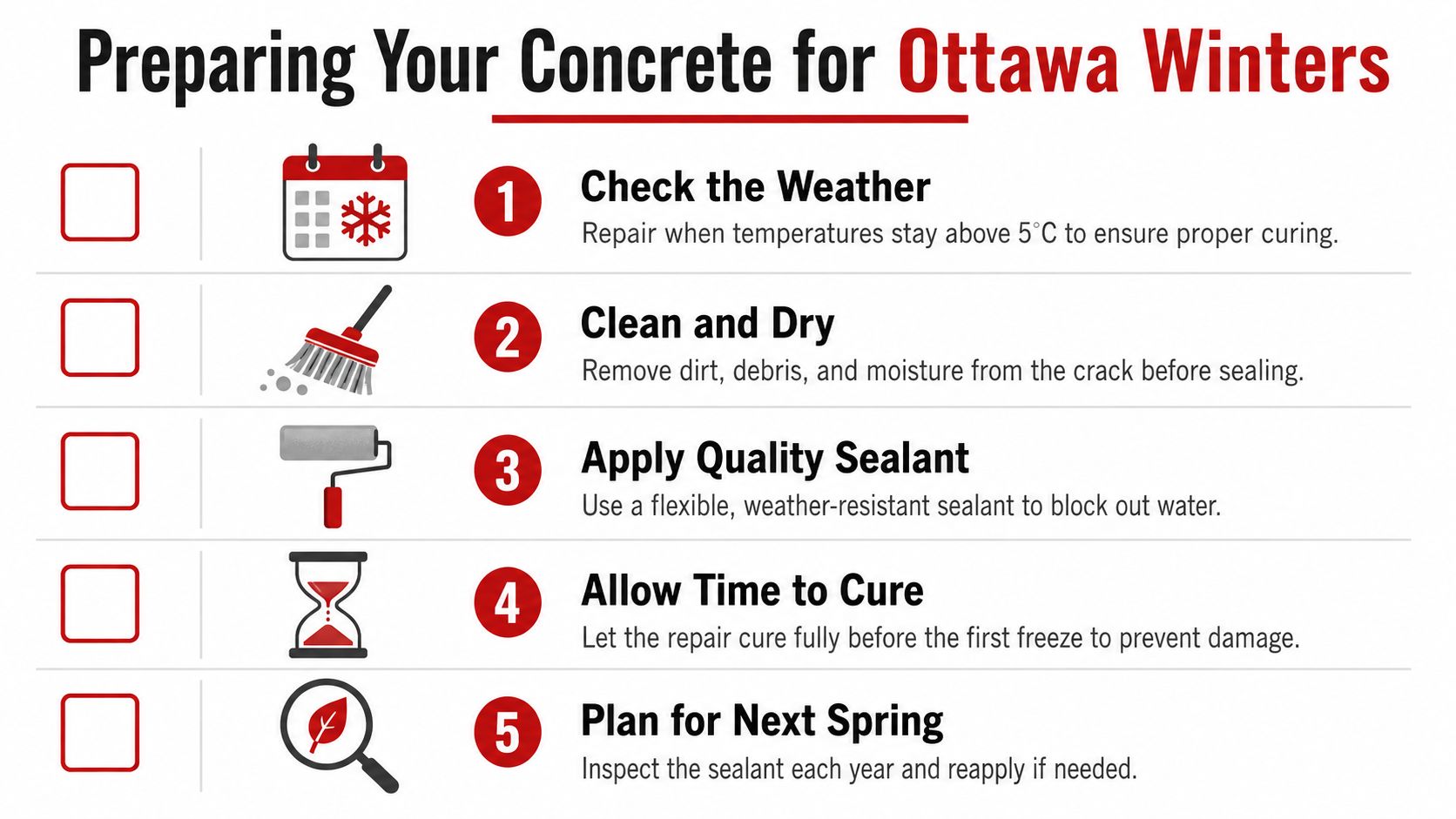
During winter, use sand instead of salt on driveways and walkways where traction is the priority. Wait until temperatures are above zero before applying de icing products, as Ottawa winter maintenance guidance advises. Clear snow without scraping aggressively across repaired edges, and don't allow meltwater to refreeze beside the slab.
Respect cold weather placement
Concrete placement below 5 C requires heated enclosures and insulated curing to manage winter conditions. That requirement is one reason many projects in Kanata and Orleans are planned for warmer months rather than rushed into a cold-weather installation.
For broader maintenance planning, see this guide to concrete sealing and staining. The key is not to treat sealer as a cure for movement. Sealing protects a properly prepared surface, while drainage and stable support protect the slab itself.
When to Hire a Pro and Choosing the Right Contractor
Hairline crack filling and a small surface patch can be reasonable homeowner work when the slab is level, solid, and draining correctly. The line changes once you see heave, settlement, rocking sections, hollow sounds, foundation directed runoff, or broken concrete that carries vehicle loads. Those conditions involve preparation, support, curing, and sometimes load transfer, which are difficult to manage reliably with a bag of patching compound.
Choose a contractor who understands Ottawa's freeze and thaw conditions rather than treating every crack as a generic cosmetic repair. Ask for references from nearby areas such as Barrhaven, Nepean, Kanata, Stittsville, or Orleans, and request a written explanation of what caused the movement.
Questions worth asking before work begins
Cause: What evidence shows whether the problem is surface damage, settlement, frost heave, or drainage?
Base: Will the contractor inspect or correct the supporting material beneath the slab?
Water: Where will roof runoff and surface drainage go after the repair?
Method: Why is resurfacing, leveling, or replacement appropriate for this slab?
Curing: How long must people and vehicles stay off the repair?
Protection: What sealer and winter maintenance plan suit the repaired surface?
For projects involving railings, posts, or other fixtures attached to concrete, this Ultra Modern Rails guide can help clarify the attachment considerations, but it doesn't replace a slab assessment.
Ottawa Stamped Concrete offers restoration and resurfacing work that can include cleaning, repairing, recolouring, and resealing existing concrete surfaces. The main takeaways are simple: patch stable slabs, level settled slabs when the concrete and base allow it, and replace sections when movement or drainage has made the existing slab unreliable. If your driveway or walkway is showing new spring damage, don't start with filler. Start by checking where the water goes and whether the slab is still moving.
Ottawa Stamped Concrete can assess worn driveways, patios, walkways, porches, and pool decks across Ottawa, including Barrhaven, Nepean, Kanata, Stittsville, and Orleans. Visit Ottawa Stamped Concrete to discuss a repair, resurfacing, or replacement plan that accounts for the local freeze and thaw cycle before the next winter arrives.
Comments