
8 Stamped Concrete Patios Ideas for Ottawa Yards

You've found a patio photo you love, but the same pattern may not suit your Ottawa yard, house, or winter maintenance routine. A broad slate design can complement an established home in The Glebe, while a crisp brick pattern may fit Kanata's newer streetscapes more naturally. In Orleans, a warm cobblestone surface can add character, but the right drainage plan matters more than the pattern itself.
This gallery compares eight stamped concrete patio ideas by pattern, neighbourhood character, yard application, and installation trade offs. You'll see how ashlar slate, brick, cobblestone, travertine, flagstone, geometric designs, basketweave, and decorative borders perform as design choices, then how to adapt each with colour, edging, drainage, furniture planning, and sealing.
Ottawa Stamped Concrete serves the Ottawa, Ontario region, including Barrhaven, Nepean, Kanata, Stittsville, and Orleans, with over 15 years of area experience. The examples below also consider established areas such as The Glebe, where architecture and landscaping often call for a more restrained finish. For furniture inspiration, compare the layout ideas in Critelli Furniture's patio design guide before choosing the patio footprint.
Table of Contents
1. Ashlar Slate Pattern Stamped Concrete Patios in The Glebe - Where ashlar slate works best
2. Brick Pattern Stamped Concrete for Kanata Modern Homes - Match the pattern to the yard
3. Cobblestone Pattern Stamped Concrete in Orleans - Build the courtyard feeling
4. Travertine Marble Look Stamped Concrete for Premium Ottawa Properties - Choose appearance with maintenance in mind
5. Flagstone Pattern Stamped Concrete for Natural Ottawa Aesthetics - Let the furniture guide the layout
6. Geometric Modern Stamped Concrete Patterns for Contemporary Kanata Homes - Use contrast selectively
7. Basketweave Pattern Stamped Concrete for Traditional Ottawa Neighbourhoods - Give the pattern room
8. Stamped Concrete with Decorative Borders and Inlays for Custom Ottawa Patios - Design the edge before the centre
1. Ashlar Slate Pattern Stamped Concrete Patios in The Glebe
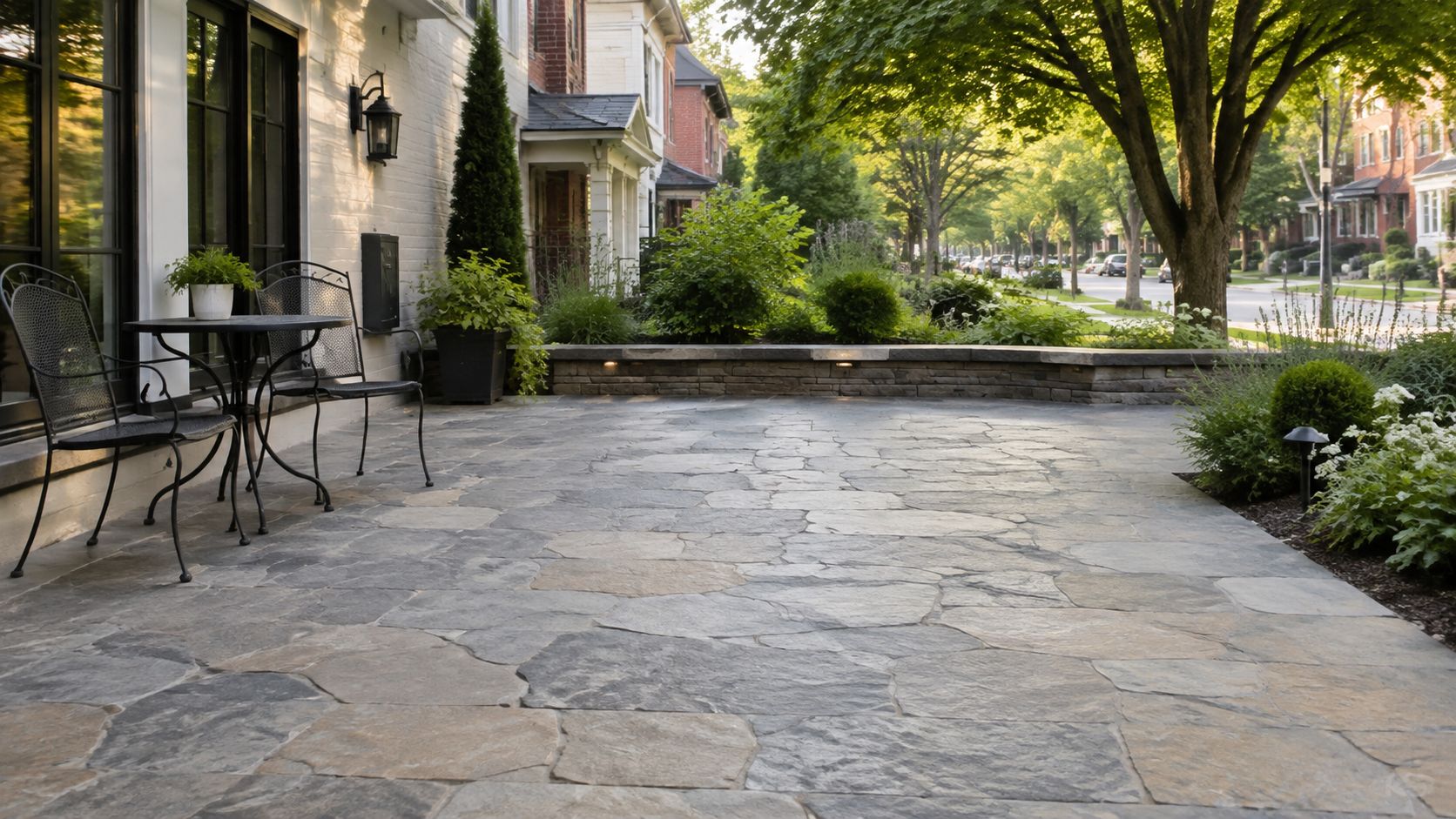
Ashlar slate gives concrete the appearance of broad slate pieces arranged in a formal, varied layout. Its irregular tile proportions soften the geometry without making the patio look casual, which is why it suits established residential settings such as The Glebe. Warm grey, muted tan, and blended earth tones work particularly well beside brick façades, mature trees, and heritage inspired landscaping.
A patio near Bank Street or Bronson Avenue may need to feel like part of the property rather than a separate modern feature. Ashlar slate can make that connection when the colour echoes the home's masonry or trim. A decorative border adds order around the field pattern, especially where the patio has a simple rectangular footprint.
Where ashlar slate works best
Use this pattern for a dining terrace, a small bistro area, or a larger entertaining space that needs visual structure. The textured surface can provide useful traction, but texture alone doesn't solve winter water management or ice concerns.
Ottawa planning point: Keep the finished surface draining away from the foundation, and settle the permit question before work begins. Ottawa generally doesn't require a building permit for a simple at grade patio, but rules can change when the project connects to the house, changes drainage, or includes grade transitions. See the City's guidance on patios, awnings, tents, and canopies.
Apply a quality sealer before the first winter, and plan furniture locations before stamping so chair legs don't sit across awkward joints. Ashlar slate is a strong choice for The Glebe, but highly contrasting colours can make a modest yard feel visually busy.
2. Brick Pattern Stamped Concrete for Kanata Modern Homes
Brick stamping brings the warmth of masonry to a concrete patio without requiring individual bricks across the entire surface. A running bond pattern creates a calm, orderly effect, while herringbone introduces more movement. Both can work beside contemporary homes in Kanata, particularly where the existing exterior already includes brick or masonry accents.
Colour matching matters more than choosing a traditional red. A grey brick effect can suit a modern façade with cool siding, while subdued brown or muted red may connect better with a warmer exterior. Dark release colour in the joints can sharpen the pattern, but excessive contrast may draw attention away from the house.
Match the pattern to the yard
Running bond is easier to live with when the patio has a narrow dining zone or a long route from the back door to the garden. Herringbone is more expressive and can make a broad, open patio feel deliberately designed. Neither should be selected only from a small sample. The pattern's scale needs to relate to the patio dimensions, furniture, steps, and planting beds.
For homes near Hazeldean Road, a brick patio can preserve a familiar residential character while supporting modern furniture. Use a border if the field pattern needs a clear edge, but avoid adding too many competing bands.
Coordinate the base colour: Compare samples against the home's brick, siding, roof, and trim.
Define the joints carefully: Contrasting grout lines improve brick readability, while a softer blend creates a quieter surface.
Protect the fall: Plan the slope so rain and meltwater move away from the house.
Seal before cold weather: A properly timed sealing application helps protect the finish before autumn freezing conditions.
Ottawa's exposure guidance gives this region a demanding technical baseline. For concrete exposed to deicing salts and winter cycling, the recommended specification is 32 MPa minimum compressive strength, a maximum water cement ratio of 0.45, and 5 to 8 percent air entrainment, as outlined in this Ontario stamped concrete patio guide. The stamp creates the appearance, but the mix and preparation determine whether the slab can handle the environment.
3. Cobblestone Pattern Stamped Concrete in Orleans
Cobblestone stamping creates a compact, interlocking visual rhythm that recalls old European streets and courtyard paving. In Orleans, this pattern can give a newer suburban yard more personality, especially when the landscaping includes curved beds, stone retaining features, or Mediterranean planting.
The pattern's smaller units make it useful around an outdoor dining set, a fire feature, or a transition between the house and lawn. Warm taupe, sandstone, and blended grey tones can all work, depending on the façade. Warm colours create a Mediterranean mood, while grey blends feel more contemporary and connect with newer exterior palettes.
Build the courtyard feeling
A cobblestone patio doesn't need to fill the entire yard. It can define a compact courtyard within the garden, with planting beds softening the edges. Lighting placed along borders or nearby paths can bring out the texture after sunset, but fixtures should be positioned so they don't create glare across the seating area.
Drainage needs to be resolved before stamping. A textured pattern can't compensate for a base that holds water or a finished surface that sends runoff toward the foundation. The City of Ottawa's rules also matter if the design extends beyond private property. The Right of Way Patio By law No. 2023 230 shows that patio placement in municipal right of way areas is governed by a separate local framework.
Cobblestone has a visual advantage in family spaces because the repeated texture can feel less formal than large stone slabs. Its trade off is maintenance attention. Snow shovels, outdoor furniture, and dirt can catch on pronounced texture, so keep the surface accessible and avoid creating unnecessary changes in level near doors.
Use a professional grade sealer when colour enhancement is part of the design. A low sheen finish may look more natural, while a stronger sheen emphasizes the pattern but can make surface marks more noticeable.
4. Travertine Marble Look Stamped Concrete for Premium Ottawa Properties
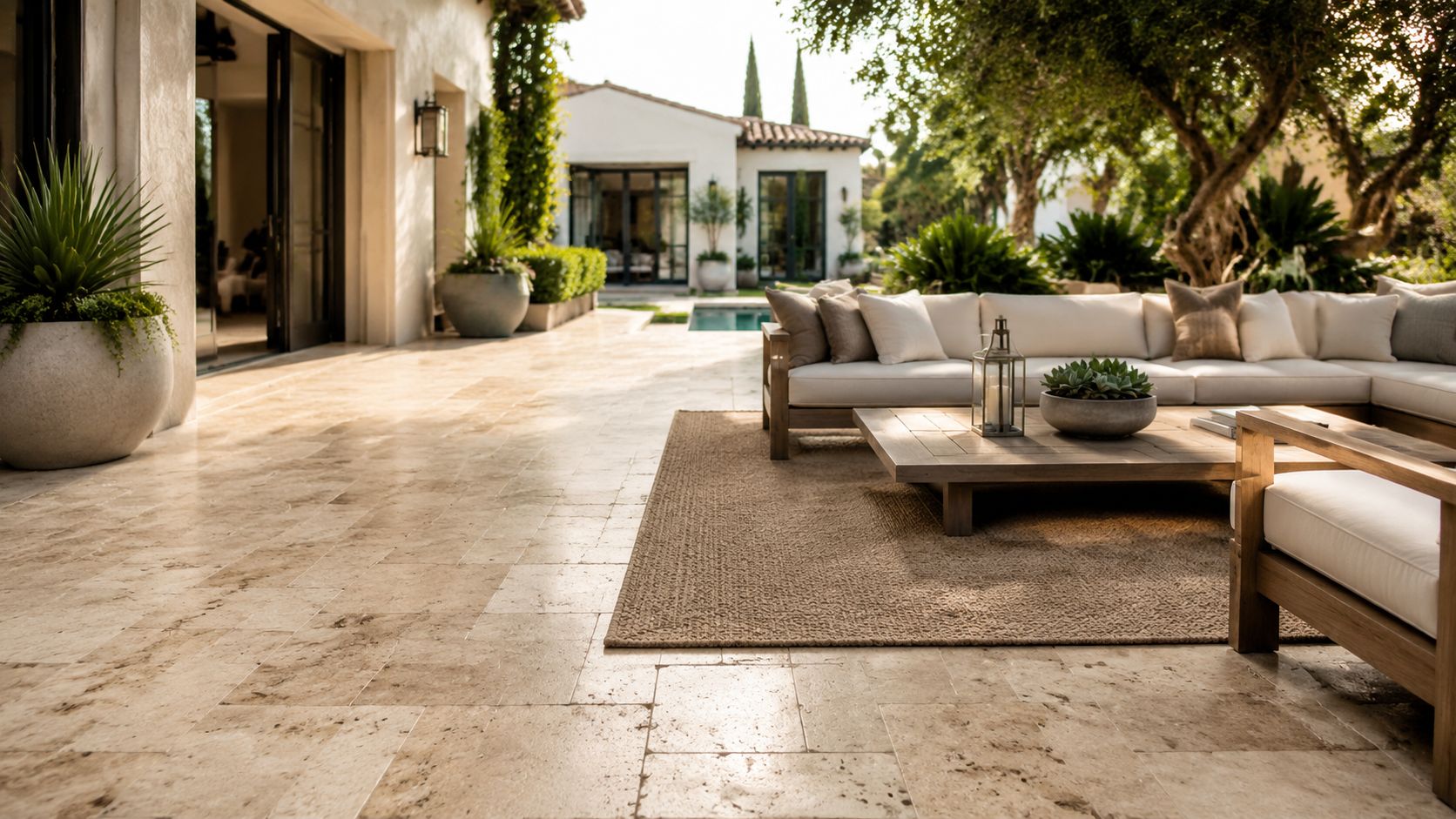
Travertine and marble inspired stamping suits homeowners who want the patio to feel like an extension of an upscale interior. Light stone colours, soft veining effects, and broad visual sections create a resort style setting beside a pool, outdoor kitchen, or carefully planted garden. This approach can suit premium properties in Kanata, The Glebe, and Orleans, but it needs restraint to avoid looking disconnected from the house.
A light base with gentle tonal variation usually feels more convincing than a stark white surface with heavy contrast. Furniture planning should happen early. A large sectional can hide much of the pattern, while a dining table, loungers, and a clear walking route can let the stone effect remain visible.
Choose appearance with maintenance in mind
Travertine looks luxurious when clean and evenly sealed. It also makes dirt, salt residue, and patchy sealer more apparent than a busier cobblestone pattern. Ottawa homeowners should avoid harsh rock salt on the surface during winter, because salt and chemical deicers can damage concrete, particularly during the first winter. Sand is a safer traction option according to this winter concrete maintenance guidance.
A premium sealer can deepen colour and support the intended finish, but sealing isn't a substitute for proper curing, drainage, or winter care. Schedule maintenance before the surface shows obvious wear, and ask for a plan that addresses cleaning, resealing, and furniture movement.
For colour and finish decisions, review concrete stamping and colouring options alongside samples at the property. A travertine look is best when the patio supports the architecture, not when it tries to become the sole focal point.
5. Flagstone Pattern Stamped Concrete for Natural Ottawa Aesthetics
Flagstone stamping is a practical fit for homeowners who want an organic stone appearance without the irregular installation process of individual natural slabs. The random layout uses varied shapes and edges, making the patio feel connected to planting beds, lawn contours, and mature landscaping. It can suit family yards in The Glebe, Orleans gardens, and multipurpose spaces in Kanata.
The best flagstone designs avoid a perfectly uniform colour. Combine related grey and tan tones so the surface has variation without looking artificially mottled. A compatible joint colour adds definition, but an overly dark joint can make every shape compete for attention.
Let the furniture guide the layout
Random patterns look natural, but furniture still needs stable zones. Place the dining table on a broad, relatively calm portion of the layout, and keep the main route from the house free of awkward stamp transitions. Curved patio edges can work well with flagstone, particularly where the hardscape follows a garden bed.
A natural pattern should follow the landscape, but the seating plan should remain deliberate.
Grading is critical during Ottawa's wet seasons and spring melt. A regional patio slab guide identifies a minimum residential thickness of 4 inches, approximately 3,500 psi compressive strength, a water cement ratio no higher than 0.45 in moist freeze thaw exposure, 5 to 7 percent air entrainment, and a slope of roughly 1/4 inch per foot away from the house. Review the technical guidance for concrete patio slabs when comparing installation proposals.
Flagstone is forgiving visually because minor colour variation supports the natural effect. It isn't forgiving of poor drainage. Before selecting the stamp, confirm where runoff will go, how the base will be prepared, and whether downspouts or nearby beds need adjustment.
For finish options, compare stamped concrete finishes with the surrounding stone, mulch, fencing, and exterior materials. A low to moderate sheen often keeps the result grounded in the area.
6. Geometric Modern Stamped Concrete Patterns for Contemporary Kanata Homes
Hexagons, linear compositions, and abstract grids give a patio a clear architectural identity. These patterns suit contemporary Kanata homes where simple façades, large windows, and structured landscaping can support a stronger visual statement. They work particularly well when the yard already has clean retaining walls, rectangular planting beds, or a sharply defined lawn.
The strength of geometric stamping is also its main risk. An exact pattern can highlight an uneven edge, an awkward step, or furniture placed without a plan. It needs a layout that respects the house lines and the practical route people take through the yard.
Use contrast selectively
A neutral background with one accent detail is usually easier to live with than several competing colours. For example, a quiet grey field with a darker linear band can connect to black window frames without overwhelming the space. A geometric pattern may also work as a focused zone beneath a dining table or fire feature rather than across every visible surface.
Design specialists can help align the pattern with the patio perimeter, doors, steps, and geometric layout. Multiple sealing applications may be appropriate for preserving colour definition, but the finish should be chosen with slip, glare, and maintenance in mind.
Start with the architecture: Continue strong lines from the house instead of introducing unrelated angles.
Reserve the focal area: Keep the boldest design beneath the feature you want people to notice.
Protect circulation: Leave clear paths between the door, seating, cooking area, and lawn.
Soften the edges: Use planting or natural stone to prevent a highly structured patio from feeling harsh.
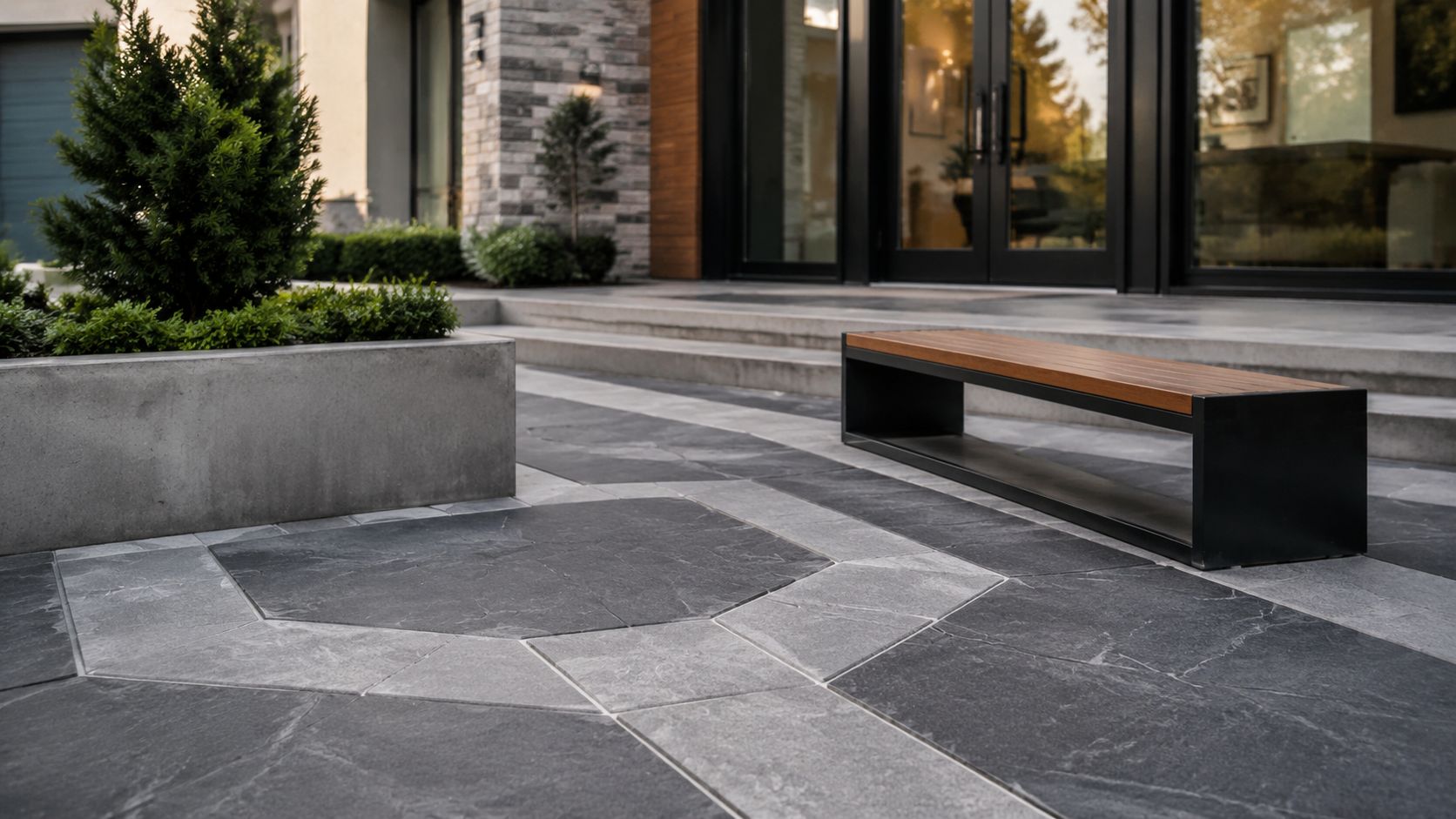
Geometric stamping is a design led choice. It works when every line has a reason, and it disappoints when the pattern is selected from a catalogue without considering the yard.
7. Basketweave Pattern Stamped Concrete for Traditional Ottawa Neighbourhoods
Basketweave uses interlocking rectangular forms to create a pattern associated with traditional masonry and crafted paving. It has enough detail to make a simple patio interesting, but its familiar structure keeps it compatible with established homes. The Glebe and Orleans are natural settings for this look, particularly where brick, wood, and mature landscaping already shape the property's character.
Two related colours can make the interlocking pattern more visible. A warm field with a slightly darker release brings out the texture, while closely matched tones create a quieter surface. Choose the colour from the exterior palette rather than from a trend image. Brick, stone, siding, and roof colours should work together before the patio is considered finished.
Give the pattern room
Basketweave needs enough open surface to read clearly. On a very small patio, furniture may cover so much of the design that the installation feels more complicated than necessary. A defined border can frame the pattern and make the overall shape appear intentional, especially when the patio sits beside a lawn or planting bed.
This design works well for a traditional dining area, a garden sitting space, or a transition near a back porch. It can also complement a brick walkway when the colours are coordinated without copying every detail.
Sealer selection affects the final impression. A finish that enhances texture and colour depth can make the pattern look richer, but too much sheen may emphasize dirt and footprints. Keep snow removal in mind, too. Use equipment and techniques that won't catch aggressively on the stamped texture, and avoid relying on chemical deicers where safer traction options are available.
Basketweave is less visually irregular than flagstone and less formal than a plain tile layout. That middle ground makes it useful for homeowners who want traditional character without a highly rustic surface.
8. Stamped Concrete with Decorative Borders and Inlays for Custom Ottawa Patios
Borders, contrasting bands, and inlays turn a standard stamped field into a patio with architectural definition. The field might use ashlar slate or flagstone, while a narrower edge uses cobblestone, brick, or a contrasting texture. This approach suits custom properties in The Glebe, Kanata, and Orleans where the patio needs to relate closely to the house and surrounding area.
A border can establish the usable furniture zone, separate a dining area from a lounge area, or frame a curved edge. Inlays can highlight a fire feature or create a visual centre beneath a table. They should support the layout, not compete with it.
Design the edge before the centre
Start by measuring the patio around the furniture and circulation paths. A border that looks substantial on a sample may become visually dominant on a narrow patio. Coordinate the border colour with the home's exterior, then use the field colour to connect with the garden, fence, or nearby walkway.
Installation complexity rises as the design introduces more patterns, colour transitions, curves, or detailed inlays. That doesn't make the approach unsuitable, but it does make planning more important. Review a scaled drawing, confirm where control joints will fall, and ask how the installer will keep the design aligned across the slab.
A border also needs protection from winter wear because its colour contrast makes fading or surface damage easier to see. Read how to apply stamped concrete sealer before comparing sealing plans, and make sure the proposal explains preparation as well as the final coat.
Ottawa's patio rules aren't one size fits all. If the work changes drainage, connects to the house, crosses into a municipal right of way, or forms part of a larger structural alteration, confirm the applicable City requirements before finalizing the custom layout.
8 Stamped Concrete Patio Styles Compared
Pattern | Implementation complexity | Resource requirements | Expected outcomes | Ideal use cases | Key advantages |
|---|---|---|---|---|---|
Ashlar Slate Pattern (The Glebe) | Medium–High; professional stamping recommended | Skilled installers; moderate–high cost; sealer every 2–3 yrs | Large irregular slate look; good traction; durable in Ottawa climate | Premium residential patios, heritage homes in The Glebe | Upscale natural-stone appearance; lower maintenance vs real slate; resale boost |
Brick Pattern (Kanata) | Medium; consistent stamping skill needed | Skilled stampers; moderate cost; regular sealing | Authentic brick aesthetic; durable; easier repairs than real brick | Modern and traditional Kanata homes, new developments | Versatile style; more affordable than brick; low maintenance |
Cobblestone Pattern (Orleans) | High; complex interlocking stamping | Highly skilled labor; higher labor cost; sealing recommended | Distinct European character; textured, anti-slip surface | Family-friendly patios, Mediterranean-inspired yards in Orleans | Unique curb appeal; superior grip when wet; customizable colors |
Travertine/Marble Look (Premium Ottawa) | High; expert contractors required | Expert installers; highest cost; premium sealers; annual maintenance | Luxurious resort-style stone look; high curb value; durable but sensitive to de-icers | Luxury properties across Ottawa (Glebe, Kanata, Orleans) | High-end natural-stone mimicry; easier upkeep than real stone; strong property value impact |
Flagstone Pattern (Natural Aesthetics) | Medium; skilled stamping for variation | Skilled stampers; moderate cost; regular sealing | Natural irregular stone appearance; blends with landscaping; versatile | Gardens, family patios across Ottawa neighbourhoods | Natural look that suits many landscapes; cost-effective vs real flagstone |
Geometric Modern (Contemporary Kanata) | High; precise design and installation | Design specialists; precise stamping; higher cost; extra sealing | Bold contemporary statement; highly customizable; may limit future styles | Contemporary homes, new construction and modern estates in Kanata | Distinctive, personalized aesthetic; strong curb appeal for modern architecture |
Basketweave Pattern (Traditional Ottawa) | Medium; careful layout required | Skilled stamping; moderate cost; sealing | Classic woven appearance; moderate texture; timeless look | Heritage and traditional properties in The Glebe and Orleans | Timeless design; appropriate for traditional homes; moderate cost |
Decorative Borders & Inlays (Custom Ottawa Patios) | Very High; complex multi-step installation | Premium contractors & designers; highest cost; complex maintenance; premium sealers | Personalized architectural finish; high visual definition; significant value add | Discerning homeowners and premium estates across Ottawa | Unlimited customization; enhances any primary pattern; professional, high-value outcome |
Turn Your Favourite Patio Concept Into a Buildable Plan
The strongest choice depends on the relationship between the pattern and the property. Flagstone, ashlar slate, cobblestone, and travertine suit natural-looking yards where the patio should resemble natural stone. Brick and basketweave fit traditional homes, heritage-inspired renovations, and established neighbourhoods. Geometric patterns work best with contemporary architecture, while borders and inlays make sense when you want a custom focal point rather than a basic field pattern.
Begin with the yard dimensions and the way your household uses the space. Mark the dining table, lounge furniture, grill, fire feature, steps, and the route from the back door before choosing the stamp. A beautiful pattern can disappear beneath oversized furniture, and a narrow patio can feel crowded when a border or inlay takes too much visual space.
Next, compare the existing architecture. Warm brick and tan siding often call for related earth tones, while contemporary façades may support quieter grey blends and carefully controlled contrast. Don't choose a colour from a screen alone. Look at physical samples beside the house, paving, fencing, and planting in the actual Ottawa light.
Drainage comes before decoration. Ask where rainwater and spring melt will travel, how the finished grade will relate to the foundation, and whether downspouts or nearby garden beds need changes. Ottawa's municipal rules also deserve attention. A simple at grade patio generally doesn't require a building permit, but connections to a house, drainage changes, grade transitions, larger structural work, and municipal right of way placement can change the planning requirements. The City's deck guidance also identifies a building area over 10 square metres, about 108 square feet, as a permit threshold for certain new buildings, additions, or alterations to structures. Review the City of Ottawa deck permit guidance before treating a decorative surface as a completely separate project.
Then weigh winter care and installation complexity. Highly textured or dark finishes may show salt residue, dirt, or sealer inconsistency more clearly. Chemical deicers can damage concrete, especially during the first winter, so plan safer traction and snow removal habits. Finally, compare sealing schedules, surface preparation, mix specifications, control joints, and base preparation rather than judging proposals by pattern and colour alone.
For homeowners deciding whether to handle a small task independently or hire specialized help, the comparison in choose between DIY or professional pest service offers a useful reminder to weigh complexity and risk. A stamped patio involves grading, concrete placement, timing, pattern alignment, curing, and sealing. Ottawa Stamped Concrete can discuss these choices for properties in Ottawa, Ontario, including Barrhaven, Nepean, Kanata, Stittsville, Orleans, and The Glebe, before you commit to a design.
Ottawa Stamped Concrete offers custom stamped concrete patio installation, including pattern selection, colour coordination, borders, drainage planning, and sealing considerations for Ottawa yards. Visit Ottawa Stamped Concrete to compare patio ideas and request a conversation about your property.
Comments