
Stamped Concrete No Color: A Complete Guide for Ottawa Homes

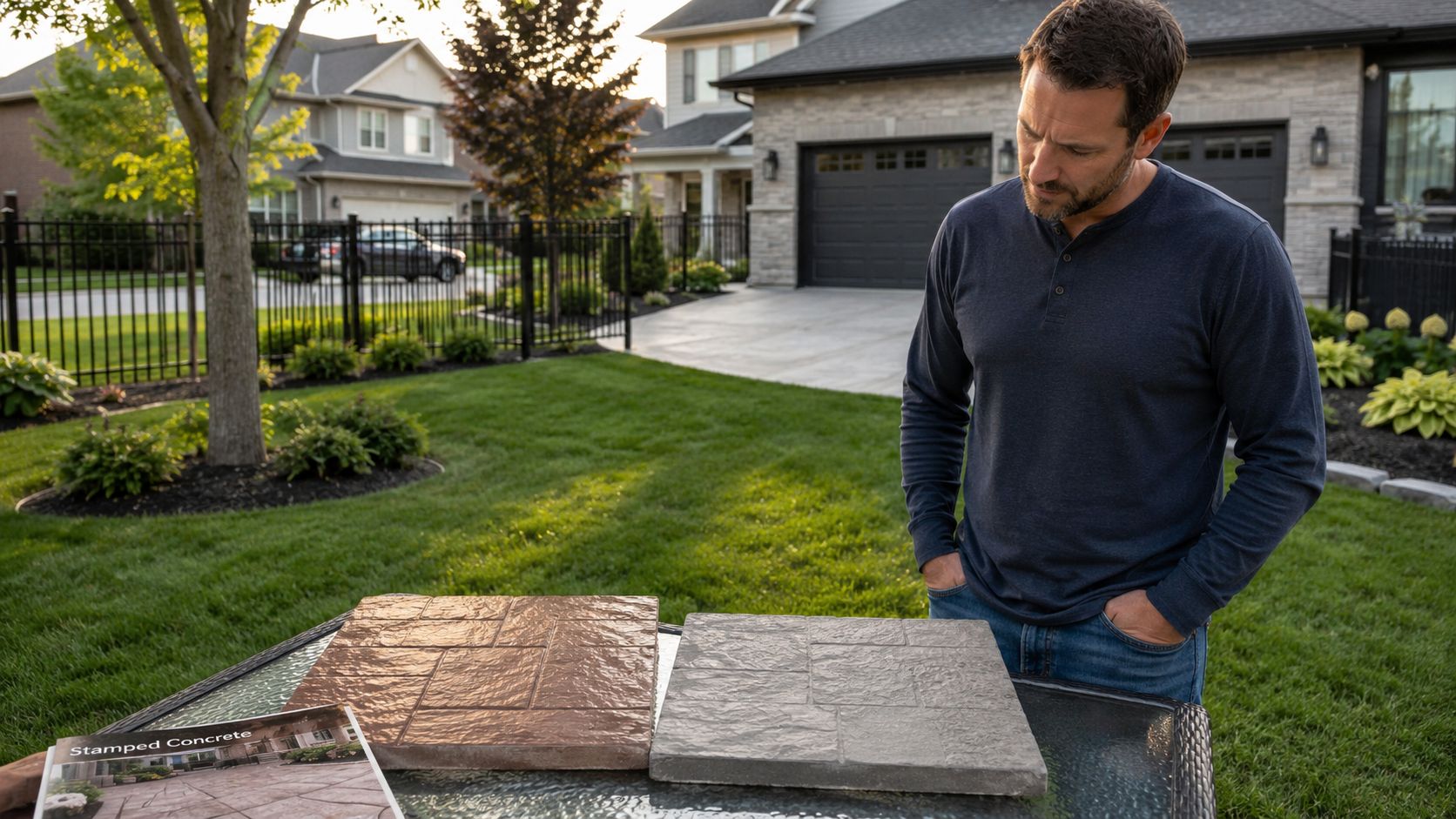
You're standing in a Barrhaven backyard with three samples on the table. One is a plain broom finish, one has a rich stone colour, and the third is a quiet natural gray with a slate pattern pressed into the surface. The coloured sample gets attention first, but the gray one raises the practical questions. Will it cost less? Will it look dated? Will it handle Ottawa snow, salt, and repeated freezing without needing constant colour repairs?
Stamped concrete no color sits between a basic slab and fully coloured decorative concrete. The pattern supplies the visual interest, while the natural gray keeps the finish restrained and closer to ordinary concrete. That makes it a deliberate design choice, not automatically a shortcut. Ottawa has a mature concrete industry behind this option, including 1,220 Canadian cement and concrete product manufacturing establishments with employees in 2025 and 439 employer establishments in Ontario, according to Government of Canada industry data.
Table of Contents
Why Ottawa Homeowners Are Considering Natural Gray Stamped Concrete - Texture carries the design - Ottawa weather changes the calculation
What Stamped Concrete No Color Actually Means - The three finishes are not interchangeable - No colour doesn't mean no craftsmanship
Cost Comparison for Uncolored Stamped Concrete in Ottawa - Where the long-term value appears
How Natural Gray Stamped Concrete Handles Ottawa Winters - What the gray surface shows - A realistic maintenance horizon
Finishing and Sealing Techniques for Colorless Stamped Slabs - Timing and surface control - Sealer controls the final look
When to Choose No Color Stamped Concrete and When to Add Pigment
Why Ottawa Homeowners Are Considering Natural Gray Stamped Concrete
A Kanata homeowner may want a patio with more finish than a broom slab, without creating a manufactured imitation of expensive stone. In Stittsville, someone replacing a cracked driveway may prefer concrete that works with brick, siding, and changing planting beds instead of committing the property to warm red or brown tones. Natural gray stamped concrete belongs in that middle ground.
Modern stamped concrete has been established for decades, with industry histories commonly tracing its modern use to the 1950s and its broader popularity to the 1970s. Ottawa homeowners are selecting a mature decorative treatment, not testing an experimental material. The option is supported by an established concrete supply chain, as described in Canadian cement and concrete product industry information.
Texture carries the design
Without added colour, the pattern, relief, joint lines, and shadows provide the visual interest. A slate texture can give a patio a structured, contemporary surface. A stone pattern can soften a walkway beside planting beds. Gray also leaves more freedom for future changes to the yard because the hardscape does not compete with every new colour.
The trade-off is straightforward. Coloured stamped concrete can reproduce particular stone families with more variation and stronger tonal depth. Natural gray provides a quieter result, but it will not deliver the layered earth tones some homeowners expect from a premium decorative installation.
Ottawa weather changes the calculation
Freeze-thaw exposure affects concrete in Barrhaven, Nepean, Kanata, Stittsville, and Orleans. Historical Ottawa data report an increase in average winter freeze-thaw days, from 34.4 days during the December to March period over the historical record, to 40.8 days from 1984 to 2004 and 41.6 days over the last ten years, according to federal climate information for Ottawa.
Skipping pigment does not make a slab resistant to that exposure. It can simplify the appearance of future repairs because colour matching is less demanding, and it removes pigment from the main visual system. It does not eliminate the need for sound base preparation, correct finishing, proper curing, control joints, or a suitable sealer.
The potential saving is therefore long-term and practical, not automatic. A homeowner may spend less on colour materials, but poor drainage, weak preparation, or neglected sealing can still create repair costs.
Site visit rule: Choose no colour because you prefer the pattern and gray finish, not because you expect Ottawa weather to stop affecting concrete.
What Stamped Concrete No Color Actually Means
Think of three shirts. A plain broom finish is the basic cotton shirt, practical and textured but visually simple. Coloured stamped concrete is the printed graphic shirt, using pigments or other colour treatments to create a strong visual identity. Natural gray stamped concrete is the embossed shirt. The surface has a raised design, but the material keeps its underlying colour.
The contractor places and finishes the concrete, then presses a selected stamp pattern into the workable surface. That action creates texture, pattern geometry, relief, and joint definition. With no integral pigment or colour hardener, the visible field remains close to the natural gray of the cement paste.
The three finishes are not interchangeable
A broom finish receives a textured drag across the surface, usually for traction and a straightforward appearance. Coloured stamped concrete adds decorative pattern plus colour, often using integral pigments, shakes, stains, or release effects. No colour stamped concrete keeps the decorative imprint while omitting added pigment inputs.
Concrete Alberta explains that colour comes from pigments, shakes, and stains, and that CSA A23.1 requires curing for concrete under the standard regardless of exposure class, as outlined in its technical resources for concrete. Omitting colour doesn't remove the curing obligation or reduce the need for a competent finishing crew.
A release agent can still be used. It prevents stamps from sticking and may leave darker accents in lower areas or around pattern edges, depending on the product and application. That effect isn't the same as a full base colour. It creates limited antiquing or mottling, while the primary appearance still comes from gray paste, texture, and shadow.
No colour doesn't mean no craftsmanship
The most common misunderstanding is that uncoloured stamped concrete needs less technical control. In practice, the opposite can be true visually. Colour can disguise small differences in tone, but a gray slab exposes uneven finishing, inconsistent moisture, dirty tools, and poorly timed stamping.
No colour also isn't exposed aggregate. Exposed aggregate reveals selected stone by removing surface paste. Stamped concrete keeps a patterned surface impression in the concrete paste, unless the design combines it with another finish.
The Ontario trade guidance for flatwork warns that minimal finishing helps preserve durability, while over finishing can compromise the top paste layer and change the appearance. That distinction matters more than the absence of pigment. A well stamped gray slab can look intentional and architectural. A poorly finished one can look like ordinary concrete with a repetitive imprint.
Cost Comparison for Uncolored Stamped Concrete in Ottawa
A no-colour quote is not a coloured quote with pigment removed. Labour, forming, excavation, base preparation, reinforcement, pattern complexity, site access, control joints, curing, and sealing still account for much of the installation. Pigment may be one line item, but stamping remains a skilled decorative process.
Ottawa and Ontario pricing references place a plain four-inch patio at about CAD $15 to $30 per square foot, while decorative stamped or coloured work commonly reaches CAD $20 to $40 or more per square foot, based on Ottawa concrete pricing information. Another Ontario guide reports that stamping generally adds about CAD $5 to $9 per square foot over a standard broom finish. For broader planning, review this Ottawa stamped concrete cost guide.
Finish Type | Price Range, CAD per sq ft | Key Cost Drivers |
|---|---|---|
Plain broom finish | $15 to $30 | Excavation, base, forming, concrete volume, access, reinforcement |
Natural gray stamped | Usually between plain and coloured decorative work | Pattern labour, timing, edge detail, control joints, release agent, sealer |
Coloured stamped or complex decorative work | $20 to $50 | Integral colour, colour hardener, release effects, stains, intricate patterns, sealing |
These ranges are planning guides, not quotations. Removing colour can reduce pigment-related material costs, but the crew still has to place, finish, and stamp the slab during the correct working window. Difficult backyard access, a detailed border, or irregular control-joint layout can absorb that saving quickly.
On a Barrhaven driveway, for example, a homeowner may compare a natural-gray pattern with a coloured version and see only a modest material difference. If the driveway narrows beside the garage or changes direction near the sidewalk, setting forms and planning joints can add more labour than the omitted pigment saves. The practical quote depends on the site, not just the finish name.
Where the long-term value appears
The strongest financial argument for natural gray is repair simplicity, not maintenance-free ownership. Decorative concrete still needs sensible cleaning and resealing, and sealing remains part of maintaining a stamped surface. A future patch may be easier to blend when it does not need to match a custom combination of base colour, release colour, stain, and sealer tone.
The trade-off is visibility. A plain gray background can make oil, tire marks, efflorescence, and darker finishing areas easier to notice. On a driveway in Orleans or Nepean, that may matter more than it would on a lightly used patio.
Resale preferences vary. A restrained gray pattern can suit a modern exterior, while another buyer may prefer a warmer stone imitation. Compare the actual price difference with the appearance you want, then consider whether the natural gray surface will still suit the property after the new-installation appeal wears off.
How Natural Gray Stamped Concrete Handles Ottawa Winters
On an Ottawa driveway, the first winter may leave a natural gray stamped slab looking unchanged, while the next seasons reveal scaling, salt residue, or small cracks around joints. The gray finish does not resist freeze-thaw damage solely because it has no pigment. Concrete performance comes from mix quality, drainage, sub base preparation, finishing, curing, joint planning, and maintenance. Colour affects appearance, not the slab's resistance to moisture and temperature changes.
Repeated winter cycling puts pressure on the surface paste. Water enters pores and small cracks, freezes, expands, and then leaves the slab vulnerable when traffic, plowing, and de-icing products add abrasion. Poor drainage makes that exposure worse. A low area beside a garage or walkway can stay wet after snowmelt, increasing the time available for moisture to enter the concrete.
What the gray surface shows
Natural gray can make a compatible repair less conspicuous than a repair on a strongly coloured slab. There is no custom base colour or release-colour combination to reproduce, so matching the general tone may be more manageable. The result still depends on texture, curing differences, surface age, sealer sheen, and the shape of the repair. A patch can remain visible even when its colour is close.
Gray also shows some contamination clearly. Oil, rubber, leaf tannins, salt residue, and efflorescence can stand out against a uniform field. A varied pattern or darker colour may break up that contrast, but it does not prevent staining or salt-related wear. Release-agent mottling changes the surface appearance without protecting it from contamination.
Toronto's municipal impressed concrete specification recognizes Natural Gray as a colour state and permits a black release agent for mottling, as shown in the Toronto impressed concrete specification. Natural gray is therefore a legitimate decorative specification, not just a lower-cost substitute.
A realistic maintenance horizon
Inspect the slab each spring for flaking, scaling, cracks, and puddles that remain after snow melts. The sealer's condition also deserves attention. As it wears, water and contaminants can reach the surface more easily, while the sheen becomes uneven and stains become harder to remove. Increased freeze-thaw exposure makes timely cleaning and resealing more useful than waiting for visible deterioration to spread.
Use winter products according to the concrete and sealer specified for the project. Avoid treating a decorative surface as indestructible, and ask the contractor which de-icing practices are appropriate. A regularly driven driveway needs planned inspection and cleaning, whether its finish is gray or coloured.
Winter reality: Natural gray may make colour matching easier during a repair, but it cannot correct trapped moisture, aggressive salt use, poor drainage, or weak surface paste.
Finishing and Sealing Techniques for Colorless Stamped Slabs
The finishing window controls the appearance of a no colour slab. Without integral pigment to create broad tonal variation, small differences in moisture and tool pressure can become visible across the pattern.
Concrete should be struck off and finished without reworking bleed water into the surface. Ontario guidance says the pattern reads most clearly when the slab is finished immediately after screeding and before bleed water is worked back into it, as explained in the Ontario flatwork brochure.
Timing and surface control
Stamping before bleed water has dissipated can weaken the surface and disturb the appearance. Waiting too long can make the impressions shallow or incomplete. The crew needs to judge the slab rather than follow a clock alone.
Overworking can darken the surface. Dirty or wet tools can also alter the finish, creating darker areas or inconsistent sheen once the sealer is applied. The Canadian patterned concrete specification guidance specifically highlights over working, tool condition, moisture control, and the need to stamp after bleed water has dissipated.
A contractor should be able to explain these points clearly:
Prepare the base: Confirm the sub base is even, compacted, and designed for drainage.
Set the stamping window: Check the concrete's firmness across the entire pour before imprinting.
Refine edges: Clean borders and transitions before the surface becomes unworkable.
Plan joints: Place control joints where they support the pattern rather than cutting across a major visual feature.
Cure and seal: Follow the curing requirements, then apply a compatible sealer to a clean, dry surface.
Sealer controls the final look
A matte or low sheen sealer keeps natural gray closer to its untreated appearance and lets texture provide the visual definition. A glossy film forming sealer darkens the surface and increases contrast, which can make the pattern appear richer but may also highlight unevenness, bubbles, or cloudy areas.
CSA A23.1 curing requirements still apply when the contractor uses no decorative colour additives, as noted by Concrete Alberta's technical guidance. Ask whether the crew has a curing plan for changing spring and fall weather, how moisture will be checked before sealing, and whether a test area will be approved first.
For routine care, homeowners can review these DIY concrete cleaning methods before using harsh tools or chemicals. Cleaning should preserve the sealer rather than strip it, and a contractor should identify the existing sealer before recommending a stronger treatment. More detail on suitable protection and appearance choices is available through this guide to concrete sealing and staining.
When to Choose No Color Stamped Concrete and When to Add Pigment
Choose natural gray when the design depends on texture, shadow lines, and geometry. A modern patio beside a clean lined home can benefit from the quiet background. A walkway beside natural planting may look more convincing with a stone pattern and restrained colour. A pool deck can also suit a lighter, less colour intensive surface, although slip resistance and surface temperature still need to be discussed with the installer.
No colour makes particular sense when:
The architecture is already busy: Gray won't compete with brick, siding, railings, or landscaping.
You want repair flexibility: Matching a neutral base may be simpler than reproducing a layered decorative colour system.
The pattern matters most: Slate, ashlar, and geometric textures can carry the design without strong hue variation.
You prefer a contemporary finish: Natural gray works with minimalist outdoor furniture and simple planting schemes.
Pigment earns its place when colour is central to the result. If you're trying to imitate a specific stone, coordinate with warm brick, or create a clearly defined outdoor room, integral colour and release effects provide visual depth that gray alone can't reproduce. A driveway may also benefit from a varied colour field if you're concerned about the visibility of oil marks and tire residue.
Colour is a measurable mix design choice, not merely a surface decoration. Interstar's professional information identifies integral colour products certified to ASTM C979, while Davis Colors describes common pigment additions of 0.5 percent to 2 percent by mass of cement in white cement based mixes. No colour concrete omits those pigment inputs, but it still requires the same disciplined concrete work.
Review the differences in concrete stamping and coloring before approving a pattern. The right question isn't which finish sounds more premium. It's whether your property needs colour variation or whether the relief and pattern already provide enough character.
Planning Your Ottawa Stamped Concrete Project
Start with the site, not the brochure. Ask each contractor how they prepare the sub base, manage drainage, place control joints, schedule curing, and protect fresh concrete when Ottawa weather changes quickly in spring and fall. Ask specifically for completed natural gray stamped projects you can view in person, because gray concrete changes noticeably under sun, shade, and wet conditions.
Use this short checklist during estimates:
Experience: How often does the crew install uncoloured stamped patios, driveways, walkways, porches, or pool decks?
Finishing: How do they determine when bleed water has dissipated, and how do they prevent over working?
Curing: Which curing method will they use, and how will weather affect the schedule?
Sealing: Will the finish be matte, low sheen, or glossy, and what preparation comes before sealing?
Layout: Where will control joints fall in relation to the stamp pattern and property lines?
Maintenance: What cleaning and resealing routine suits the selected surface and expected traffic?
If the project includes a fire feature, review practical safety tips for concrete fire bowls before placing it near the slab, furniture, fencing, or overhead structures.
Natural gray stamped concrete can give Ottawa homeowners a durable, patterned surface without committing to a strong colour scheme. It may offer a useful middle ground between a broom finish and fully coloured work, but the value depends on installation quality, winter exposure, maintenance expectations, and whether you like the gray appearance.
Ottawa Stamped Concrete provides custom patterned concrete for patios, driveways, walkways, porches, and pool decks across Barrhaven, Nepean, Kanata, Stittsville, and Orleans. Visit Ottawa Stamped Concrete to discuss a natural gray design, compare it with coloured options, and arrange a project conversation based on your property and Ottawa's climate.
Comments